
What are ORFS hydraulic fittings?
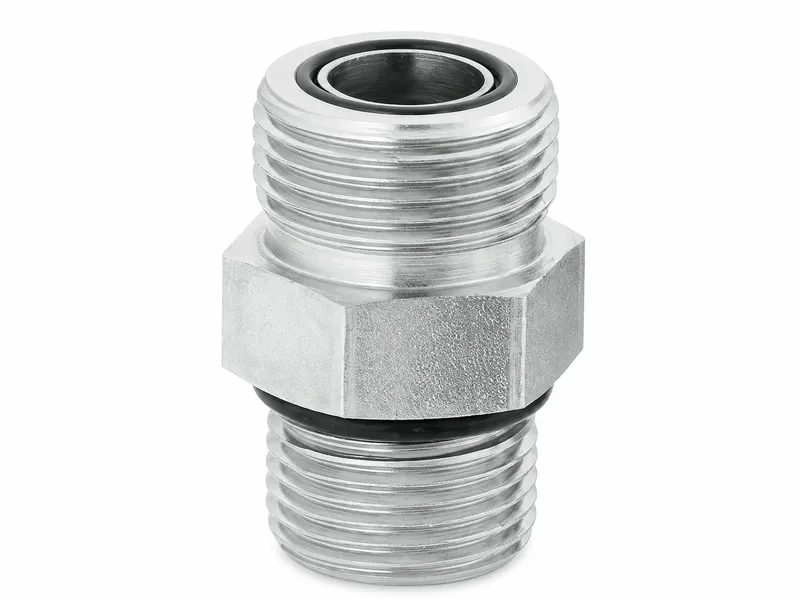
ORFS hydraulic fittings are O-ring face seal connections for joining hydraulic hoses, tubes, equipment ports and adapters. ORFS describes the face-sealing connection, not an independent thread standard.
O-ring face seal fittings and adapters manufactured to customer drawings for OEM hydraulic hose, tube and equipment connections.
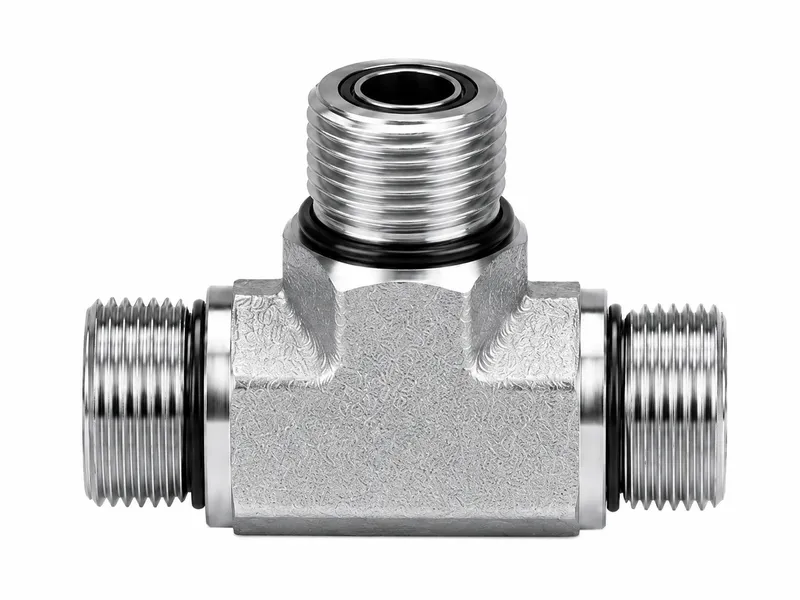
ORFS seals by compressing an O-ring against a flat face; its straight thread supplies assembly clamping force rather than the primary seal. Applicable SAE J1453 or ISO 8434-3 connection geometry can be machined when specified by the drawing or order, including connectors, adapters, elbows, tees, bulkheads and other drawing-defined forms. Pressure capability and interchangeability must be validated for the specific assembly.
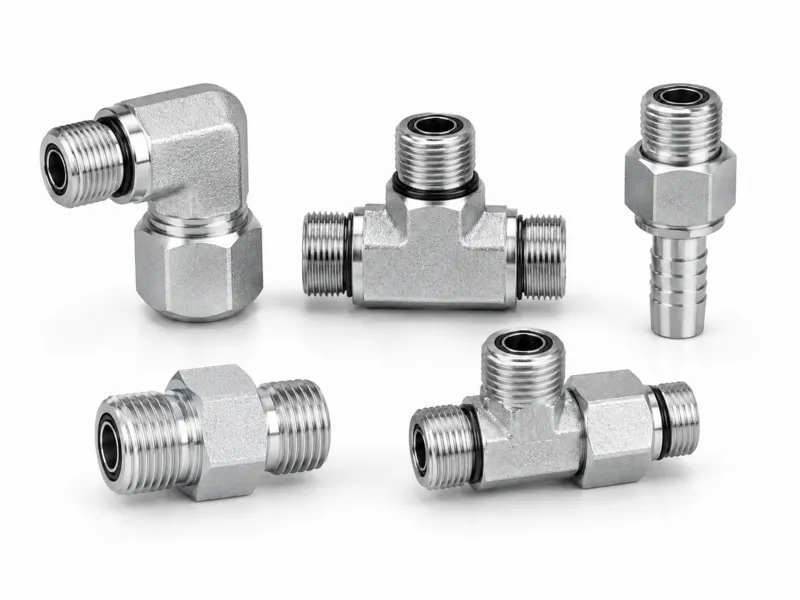
Wei Xing Machinery manufactures custom ORFS fittings and hydraulic adapters from approved 2D drawings, 3D models, verified samples and order requirements. Connection geometry, materials, finishes, O-ring provisions and inspection scope are reviewed for each OEM project.
ORFS is an O-ring face seal connection form rather than a standalone thread standard. A project may combine an ORFS end with another interface, but every port must be identified independently before manufacture or replacement.
| Product Type | ORFS fittings, adapters and drawing-specific hydraulic connectors |
|---|---|
| Connection Principle | O-ring compressed between a machined groove and flat mating face |
| Applicable Standards | Applicable connection geometry can be manufactured according to SAE J1453 and ISO 8434-3 when specified by the customer drawing or order. |
| Thread / Assembly | Unified straight thread series defined by the specified ORFS connection size; thread and nut provide clamping force |
| Body Materials | Carbon steel, stainless steel or other materials confirmed through drawing, media and application review |
| O-Ring Requirement | Compound, dimensions and compatibility confirmed for the fluid, temperature and assembly specification |
| Surface Finish | Material- and project-specific finish confirmed with the order |
| Manufacturing Basis | Approved drawing, 3D model, verified sample and/or order requirements |
| Inspection Basis | O-ring groove, face, threads, overall dimensions and agreed characteristics checked to the approved drawing and inspection plan |
| Pressure / Validation Basis | Cannot be defined by one website product category; depends on size, structure, material, assembly, mating parts, O-ring, temperature, system requirements and validation plan |
| Applications | OEM hydraulic hose, tube, machinery and equipment connections |
The O-ring sits in a machined groove and is compressed by the mating flat face. The straight thread and nut generate axial clamping force, but the thread itself is not the primary ORFS sealing location. Face damage, groove dimensions, O-ring material and assembly condition can all affect sealing. During service, inspect both the face and O-ring rather than relying only on whether the thread engages. Assembly torque must follow the applicable connection standard, customer assembly specification or system requirement; no universal torque applies to every configuration.
In-line connections defined by the drawing.
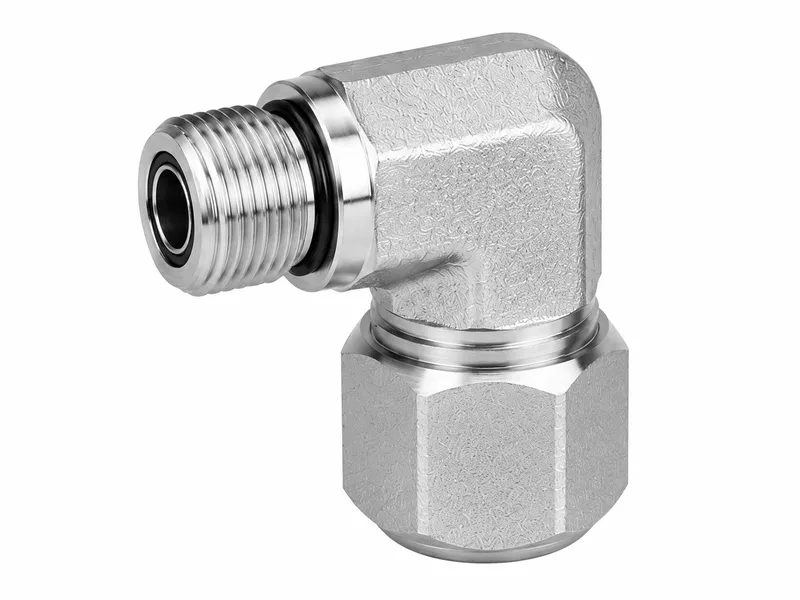
Directional routing where installation space requires a right angle.
Angled routing for drawing-defined hose or tube layouts.
Three-port components with each end separately specified.
Connections through panels or mounting structures.
Assembly-oriented swivel ends manufactured to specified geometry.
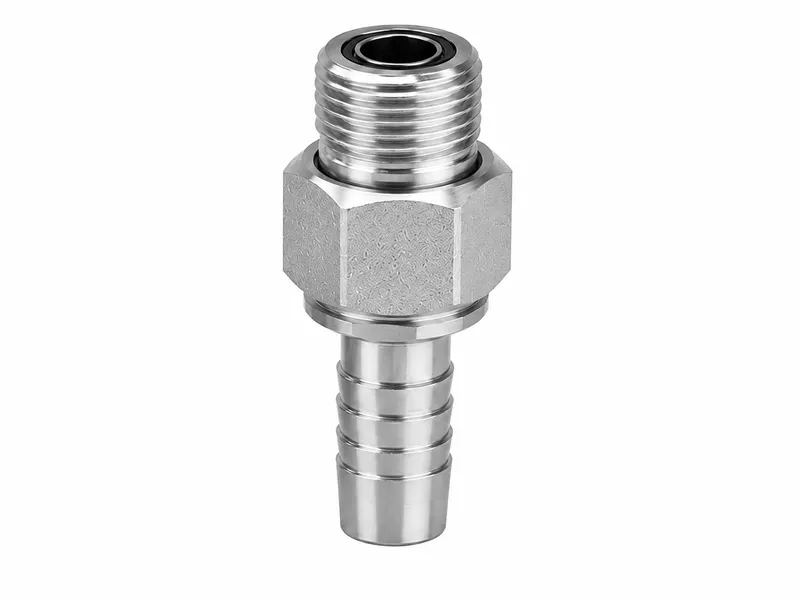
Each end may use a different connection; confirm every port's standard, size and sealing form.
Custom bodies reviewed against manufacturing and inspection requirements.
Available configurations depend on drawing review and production requirements; this list does not indicate stock availability.
| Connection Type | Primary Sealing Location | Assembly Characteristics | Selection Considerations |
|---|---|---|---|
| ORFS | O-ring at a flat face | Straight thread supplies axial clamping | Confirm face, groove, O-ring and mating dimensions |
| JIC 37° | Mating 37° metal flare faces | Metal faces are drawn together by the thread | Inspect flare geometry and face condition |
| BSPP / BSPT | BSPP may use a washer, O-ring, flat face or cone by design; BSPT uses tapered thread engagement and applicable sealant | Assembly method depends on the exact parallel- or tapered-thread design | Identify thread form and sealing arrangement separately |
| NPT | Tapered pipe-thread engagement and applicable sealant | Thread interference develops during tightening | Confirm taper, engagement, sealant and system practice |
For a focused engineering overview, see the ORFS and JIC sealing-method comparison. These interfaces are not directly interchangeable.
Surface finishing can be coordinated according to material and order requirements. Process planning is established after review of geometry, material, quantity and inspection scope.
Carbon steel and stainless steel are available; other materials are subject to drawing, media and application review. Specific grades are used only when stated by the approved specification.
Fluid compatibility, temperature range, elastomer compound, dimensions, replacement requirements and customer or assembly specifications must be confirmed. NBR or FKM may be used when specified, with compound compatibility confirmed for the application.
Options may include trivalent zinc plating, zinc-nickel coating, black oxide, phosphating when applicable, natural stainless finish, and passivation when specified and material-compatible.
Finish type, appearance, documentation and acceptance criteria are confirmed for the material and order without assuming a universal coating thickness or salt-spray duration.
Wei Xing Machinery manufactures to customer-approved drawings, models, verified samples and order requirements. The customer or system designer is responsible for connection selection, pressure rating, media compatibility, O-ring material, assembly requirements and complete-system validation. Sample appearance alone cannot define the full technical requirement. For replacements, verify every port size and sealing form. Final acceptance is based on the approved drawing and agreed inspection plan.
ORFS hydraulic fittings are O-ring face seal connections for joining hydraulic hoses, tubes, equipment ports and adapters. ORFS describes the face-sealing connection, not an independent thread standard.
A flat mating face compresses an O-ring held in a machined groove. The resulting face seal supports stable sealing when the groove, face, O-ring and assembly conditions are correctly specified.
No. The unified straight thread and nut provide axial clamping force; the O-ring and flat face form the primary seal. The face-seal location does not rely on pipe-thread sealant.
Applicable connection geometry can be manufactured according to SAE J1453 and ISO 8434-3 when specified by the customer drawing or order.
ORFS uses an O-ring compressed at a flat face, while JIC uses mating 37-degree metal flare surfaces. They require different mating geometry and must not be treated as directly interchangeable.
Provide a drawing, model, sample with verified dimensions, every port specification, material, finish, O-ring or service conditions, quantity, inspection, documentation, packaging and validation requirements.
Selection is based on fluid compatibility, temperature range, compound, dimensions and the customer or assembly specification. NBR or FKM may be used when specified and confirmed as compatible with the application.
Yes. Wei Xing Machinery can review straight, elbow, tee, bulkhead, swivel and mixed-interface adapters for drawing-based manufacture. Available configurations depend on drawing review and production requirements.
Submit the drawing, connection sizes, material, quantity, surface finish and application requirements for manufacturing review and quotation.