
Custom JIC 37° Flare Fittings
JIC 37-degree flare fittings and mixed-interface adapters manufactured to customer drawings for hydraulic tube, hose and OEM equipment connections.
A JIC connection forms its primary seal at matching 37° metal flare surfaces; unified straight threads mainly generate axial clamping force and are not the primary sealing location. Drawing-defined straight, elbow, tee, swivel, bulkhead and transition configurations can be machined. A 37° JIC end must not be mixed with a 45° flare connection based only on appearance or apparent thread engagement—verify every port and mating component separately.
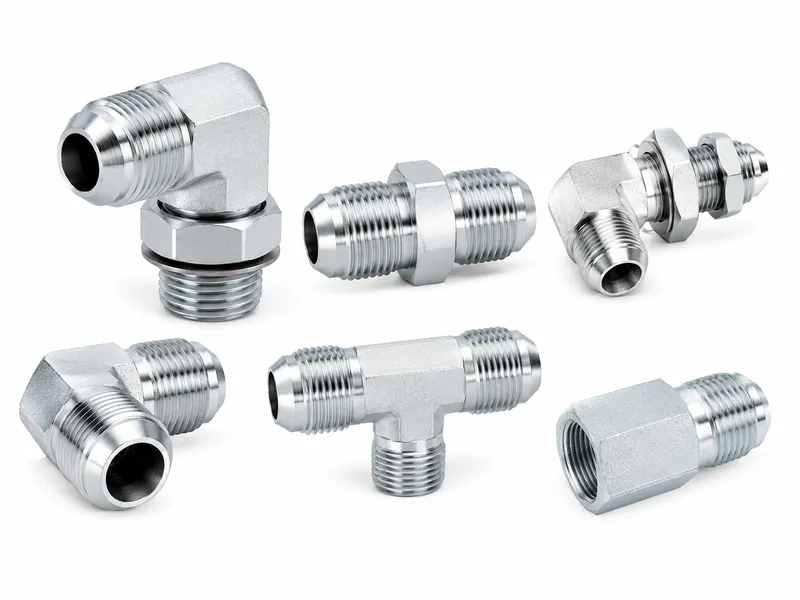
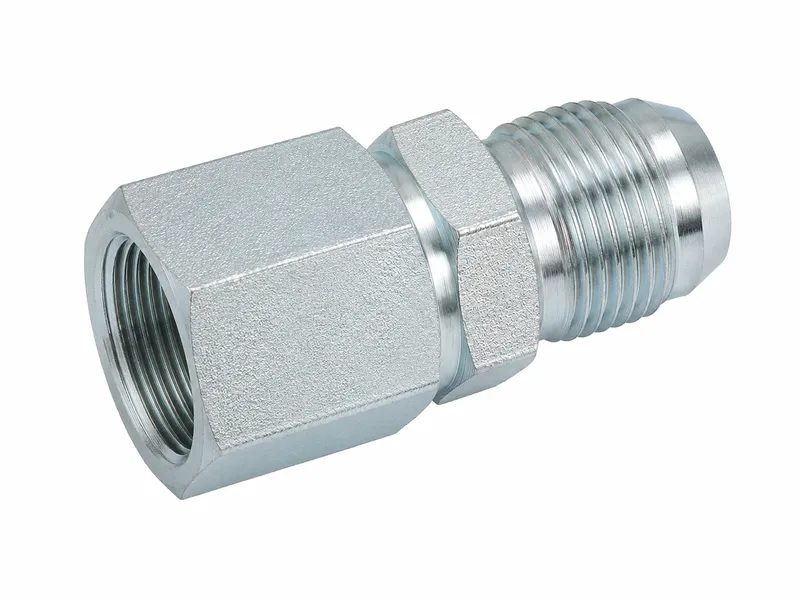
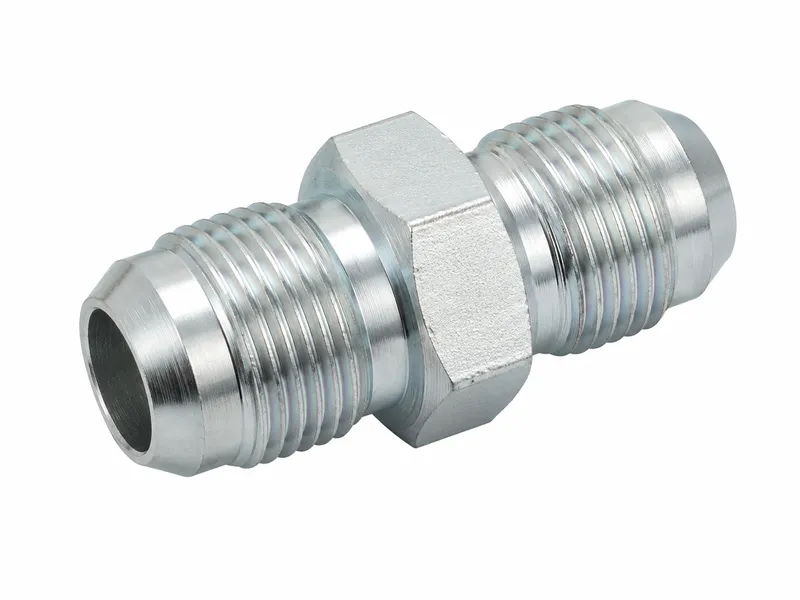
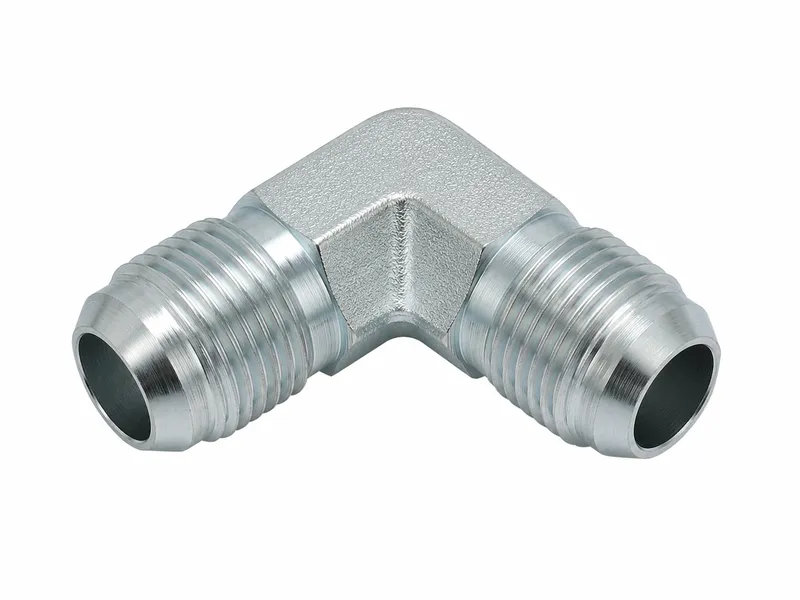
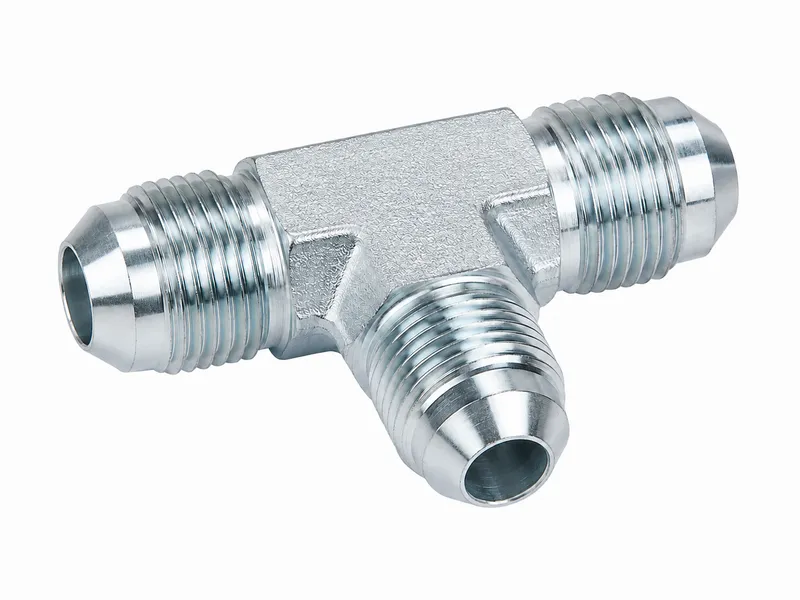
JIC Flare Fitting Manufacturing
Wei Xing Machinery manufactures custom JIC fittings and mixed-interface adapters from approved 2D drawings, 3D models, verified samples or defined order requirements. Review covers the 37° flare geometry, straight thread, body form, mating connection, material, finish and inspection plan.
Available projects can include JIC male fittings, female swivel assemblies and drawing-specific adapters. A swivel nut supports installation positioning; it does not imply continuous rotation while the system is operating or pressurized.
Key Specifications
| Product Type | Custom JIC 37° flare fittings, unions and mixed-interface adapters |
|---|---|
| Connection Principle | Primary sealing at matching 37° metal flare surfaces between the fitting nose and a compatible tube flare or hose-end mating face |
| Applicable Standards | Customer-specified SAE J514-1 and/or ISO 8434-2 requirements when identified on the approved drawing or order; legacy SAE J514 designations are reviewed as specified |
| Thread / Assembly | Unified straight threads draw mating parts together and generate assembly clamping force; thread flanks are not the primary JIC seal |
| Flare Angle | 37°; do not mix with 45° flare connections |
| Connection Ends | JIC and transitions to ORFS, NPT, BSP, metric or hose interfaces; standard, size, form, sealing location and mate confirmed for every end |
| Body Materials | Carbon steel, stainless steel or other materials subject to drawing, media and application review |
| Surface Finish | Drawing-defined finish coordinated according to material and order requirements |
| Manufacturing Basis | Approved 2D drawing, 3D model, verified sample dimensions or defined order requirements |
| Inspection Basis | Approved drawing, specified standard edition and agreed sampling or full-inspection plan |
| Pressure / Validation Basis | No category-wide pressure rating is defined here; evaluate size, structure, material, wall thickness, mating parts, tube or hose, assembly, media, temperature and complete-system validation |
| Applications | Drawing-defined hydraulic tube, hose, OEM and mixed-interface connections |
How JIC 37° Flare Connections Seal
Metal flare contact
The fitting nose contacts a matching 37° tube flare or compatible hose-end face. The straight thread and nut pull the parts together; sealing does not occur at the straight-thread flanks.
Surface and alignment
Keep the cone and flare clean, undamaged and correctly aligned. Do not force a misaligned line into position by tightening the connection.
Assembly control
Excessive tightening can damage a flare face or deform a tube end, while insufficient force can leave incomplete contact. Requirements depend on size, material, tube construction, mating parts and the applicable assembly specification; this page does not provide a universal torque table.
Service inspection
Before reassembly, inspect the cone, flare, threads, nut, sleeve and tube end for contamination, cracks, deformation or scratches. Serviceability does not mean indefinite reuse.
JIC 37° vs SAE 45° Flare Connections
| Feature | JIC 37° Flare | 45° Flare Connection |
|---|---|---|
| Flare angle | 37° | 45° |
| Typical standards/reference system | Customer-designated JIC geometry; SAE J514-1 and/or ISO 8434-2 may be specified | A distinct 45° flare reference system identified by the approved drawing and mating part |
| Primary sealing surface | Matching 37° metal flare faces | Matching 45° metal flare faces |
| Application context | Hydraulic tube, hose and equipment connections defined for JIC geometry | Applications specifically designed for a 45° flare connection |
| Interchangeability | Not interchangeable with 45° flare | Not interchangeable with JIC 37° |
| Identification requirement | Verify drawing, gauges, tube OD, thread, form, sealing face, mate and standard | Verify the same connection data; apparent thread engagement alone is insufficient |
Common JIC Fitting Types
Straight configurations
JIC male straight adapters, straight unions and male-to-female adapters.
Angled and branch bodies
90-degree elbows, 45-degree elbows and tee fittings manufactured where the approved design requires them.
Assembly configurations
JIC female swivel connections for assembly positioning, bulkhead unions, and plugs or caps where applicable.
Transition adapters
JIC-to-ORFS, JIC-to-NPT, JIC-to-BSP, JIC-to-metric and drawing-specific connectors.
Available configurations depend on drawing review, tooling, material and production requirements; this page does not imply that every type is held in stock.
JIC vs ORFS, NPT and BSP Connections
| Connection Type | Primary Sealing Location | Thread / Assembly Function | Selection Considerations |
|---|---|---|---|
| JIC 37° | Matching 37° metal flare faces | Straight threads provide clamping force | Confirm angle, size, tube OD, form, surface and mate. |
| ORFS | O-ring against a flat face | Straight threads provide assembly force | Confirm O-ring, groove, face, size and media compatibility. |
| NPT | Tapered pipe-thread engagement with applicable sealant | Tapered threads participate in sealing and assembly | Treat an NPT transition end separately from the JIC flare end. |
| BSPP | Depends on the fitting and port structure | Parallel threads primarily retain the assembly | Identify bonded seal, washer, cone or other specified sealing arrangement. |
| BSPT | Tapered pipe-thread engagement with applicable sealant | Tapered threads participate in sealing and assembly | Treat a BSPT transition end separately from the JIC flare end. |
| 45° flare | Matching metal flare surfaces at a different angle | Threads generate assembly force | Do not mix with JIC 37°; verify the complete connection definition. |
See the ORFS vs JIC connection and sealing guide for a focused comparison.
JIC Fitting Manufacturing Capabilities
Turning and threads
CNC turning, unified straight-thread machining, internal and external thread machining, 37° flare-nose machining and female 37° seat machining where specified.
Secondary machining
CNC milling where required, hex and wrench flats, drilling, tapping, cross holes, bulkhead bodies and swivel-nut components where the design specifies them.
Finishing operations
Deburring, cleaning, dimensional inspection and coordination of drawing-specified finishing. Surface finishing can be coordinated according to material and order requirements.
Process selection
Operations are selected from the approved design; not every fitting requires every listed process.
Materials and Surface Finishes
Body materials
Carbon steel, stainless steel, or other materials subject to drawing, media and application review. The specific grade must be stated by the drawing or order.
Surface finishes
Trivalent zinc plating, zinc-nickel coating, black oxide, phosphating when applicable, natural stainless finish, or passivation when specified and material-compatible.
Engineering context
Finish selection does not replace correct material selection, protection of flare surfaces or system-level corrosion design. Coating thickness, salt-spray duration, hardness, strength and roughness are only controlled when specified.
Quality Control for JIC Fittings
- Drawing and revision review; standard designation and edition review
- Material and documentation review
- Thread size and form inspection using gauges or approved mating references
- 37° flare-angle and sealing-face condition inspection
- Concentricity and alignment checks where specified
- Overall length, thread length, hex, port and cross-hole dimensions
- Swivel component fit where applicable; edge break and deburring
- Flow-passage cleanliness when specified and surface-finish visual inspection
- Sampling or full inspection according to the agreed plan
- Leak or pressure testing only when specified by the approved requirements
Applications
- Hydraulic hose assemblies
- Flared hydraulic tube lines
- Mobile construction machinery and agricultural equipment
- Industrial machinery and hydraulic power units
- OEM hydraulic systems
- Maintenance and retrofit projects based on verified connection data
- Mixed-interface adapter projects
Information Required for Quotation
- 2D drawing and 3D model when available
- Approved sample or verified dimensions
- JIC size, tube outside diameter and confirmation of the 37° flare
- Male or female form and any swivel requirement
- Every end or port, opposite-end standard and body configuration
- Material, surface finish, quantity and target application
- Operating media, relevant temperature range and pressure or validation requirement
- Inspection, documentation, packaging and any traceability requirements
“JIC fitting” alone is not enough for an accurate quotation. At minimum, confirm the 37° connection, size, tube OD or hose interface, male or female form, opposite-end connection and body configuration.
Engineering and Validation Responsibility
Wei Xing Machinery manufactures to customer-approved drawings, models, samples and order requirements. The customer or system designer is responsible for connection selection, pressure rating, media compatibility, tube and hose selection, assembly requirements and validation of the complete system.
Sample appearance alone cannot define flare angle, internal construction, tolerances, material or standard edition. Do not substitute 37° and 45° flares without verification, and confirm both ends of every transition adapter separately. A single fitting webpage cannot establish the capability of a complete hose or tube assembly. Final acceptance follows the approved drawing and agreed inspection plan.
Frequently Asked Questions
What are JIC 37° flare fittings?
JIC 37° flare fittings are hydraulic connectors whose fitting nose contacts a matching 37° flared tube face or compatible hose-end mating face. Unified straight threads draw the parts together and retain the assembly.
How does a JIC flare fitting create a seal?
The primary seal forms where clean, aligned 37° metal flare surfaces contact under appropriate axial clamping force. Flare angle, surface condition, tube preparation, alignment and assembly force all affect the connection.
Do JIC threads provide the primary seal?
No. The straight threads and nut primarily create axial clamping force; the thread flanks are not the JIC flare connection’s primary sealing location. A tapered NPT or BSPT end on a transition adapter must be assessed separately and may require compatible sealant under the system specification.
Can JIC 37° fittings connect to 45° flare fittings?
No. A 37° JIC connection must not be mixed with a 45° flare connection merely because the parts look similar or threads begin to engage. Verify angle, tube outside diameter, thread size, male or female form, sealing face, mating standard and connector construction.
Which standards apply to JIC 37° connections?
General technical descriptions may reference SAE J514-1 and ISO 8434-2. Production follows the standard designation and edition specified on the customer-approved drawing or order. Legacy drawings may identify SAE J514 and require project review; this page does not claim certification or general conformity.
What information is required to quote a JIC fitting?
Provide a drawing or verified sample data, 37° connection size, tube outside diameter or hose interface, male or female form, every port, opposite-end standard, body configuration, material, finish, quantity, application and inspection requirements.
Which materials and finishes are available?
Carbon steel and stainless steel can be reviewed, with other materials subject to the drawing, media and application. Finishes may include trivalent zinc, zinc-nickel, black oxide, applicable phosphating, natural stainless or specified material-compatible passivation.
Can Wei Xing Machinery manufacture custom JIC adapters?
Yes. We review drawing-specific JIC hydraulic adapters, including JIC-to-ORFS, JIC-to-NPT, JIC-to-BSP and JIC-to-metric designs. Each end, sealing location, mating component and validation requirement must be identified separately.
Related Products
Send Your JIC Fitting Drawing for Review
Submit the drawing, 37° flare connection size, tube or hose interface, opposite-end connection, material, quantity and application requirements for manufacturing review and quotation.